

Poseidon Aerospace
Website design and development for an aerospace company building unmanned aircraft for commercial and defense logistics.
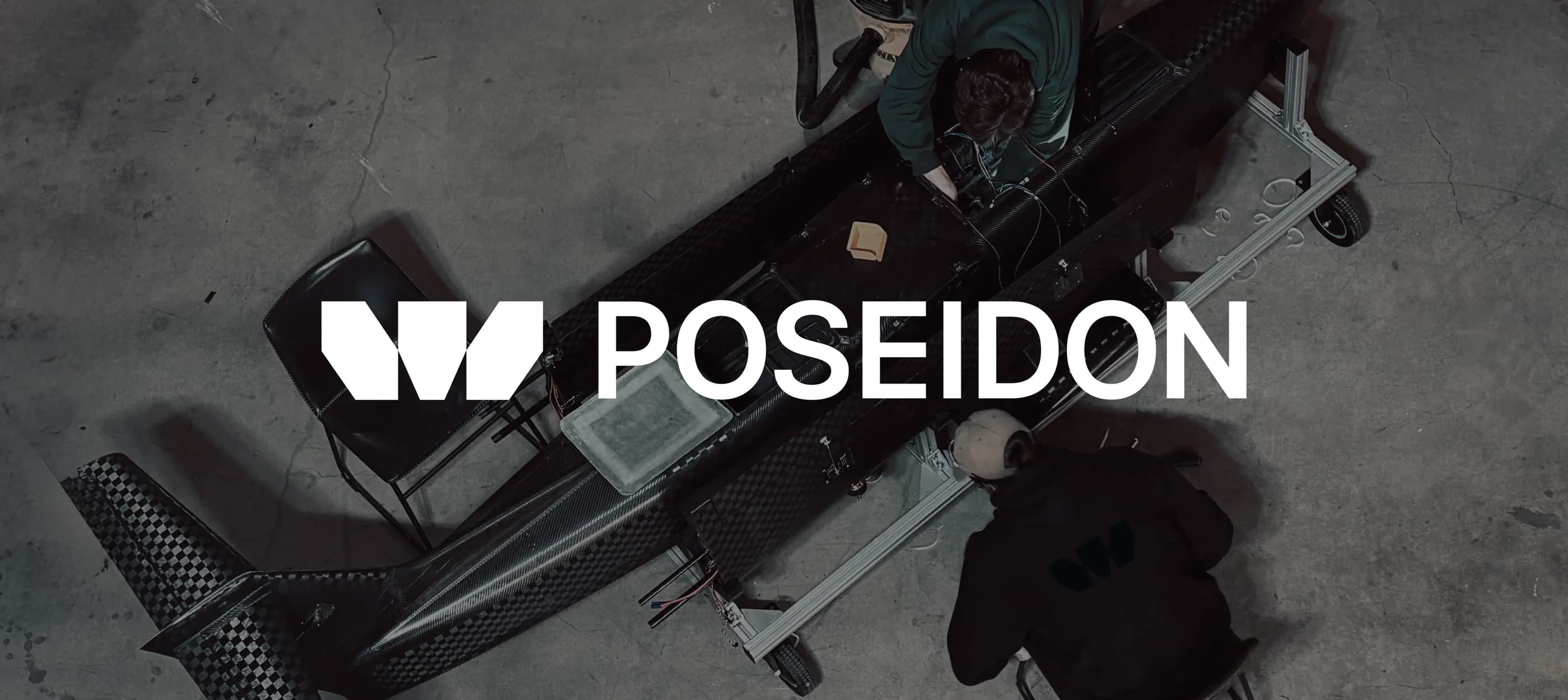
My time with Poseidon Aerospace.
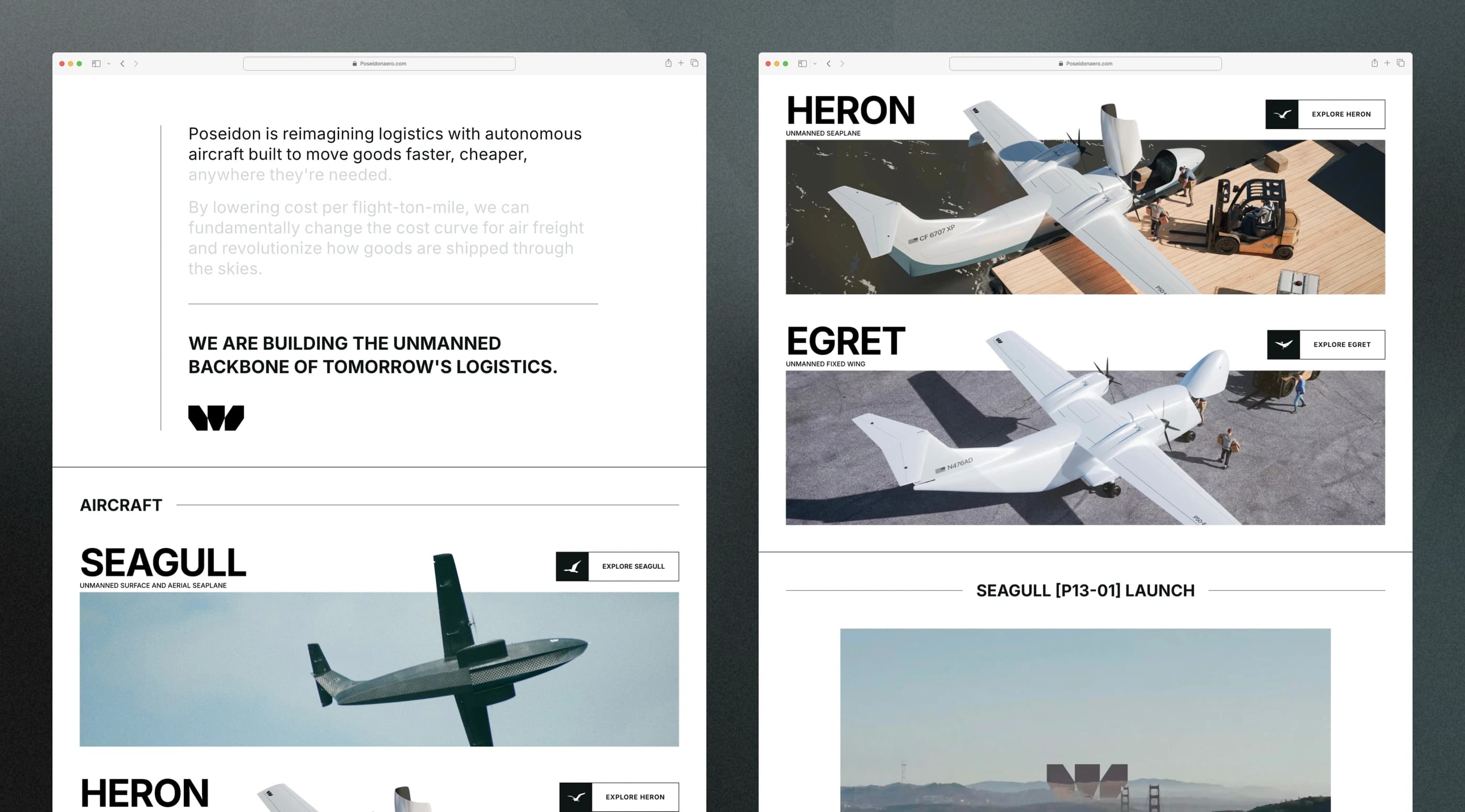
Founded in 2024, Poseidon is developing purpose-built unmanned cargo aircraft for both commercial and defense logistics. In November 2025, the company was preparing to publicly announce an $11 million seed round alongside its Egret and Heron aircraft announcement. The problem was that its existing website still felt like an early-stage startup template. It did not communicate the scale of what Poseidon was building or the credibility it needed as more customers, investors, military partners, and press began paying attention.
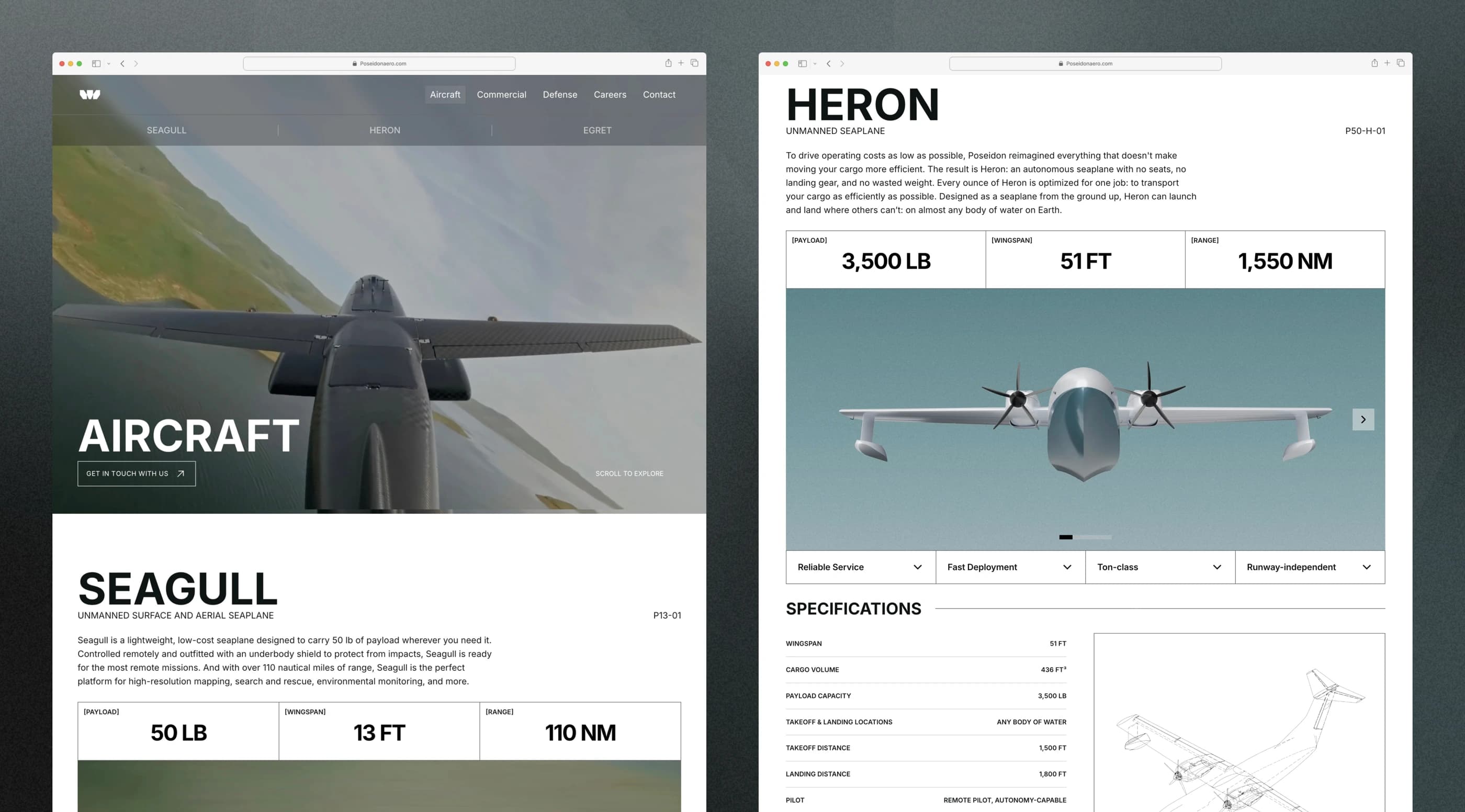
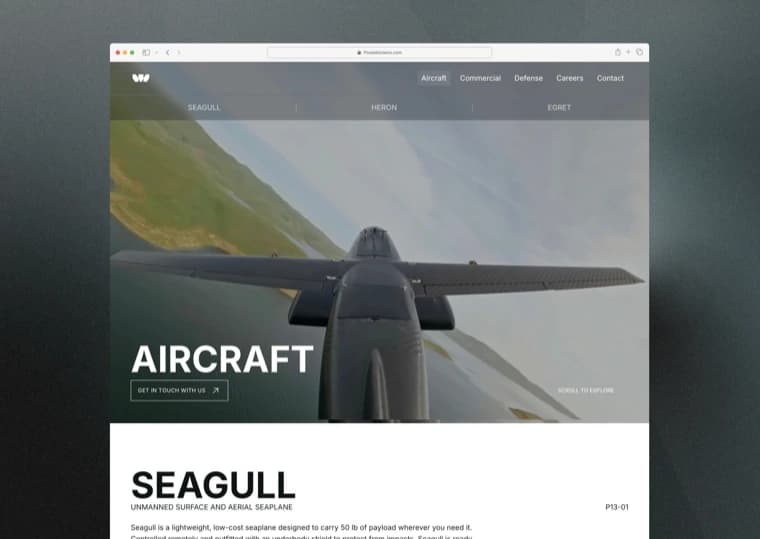
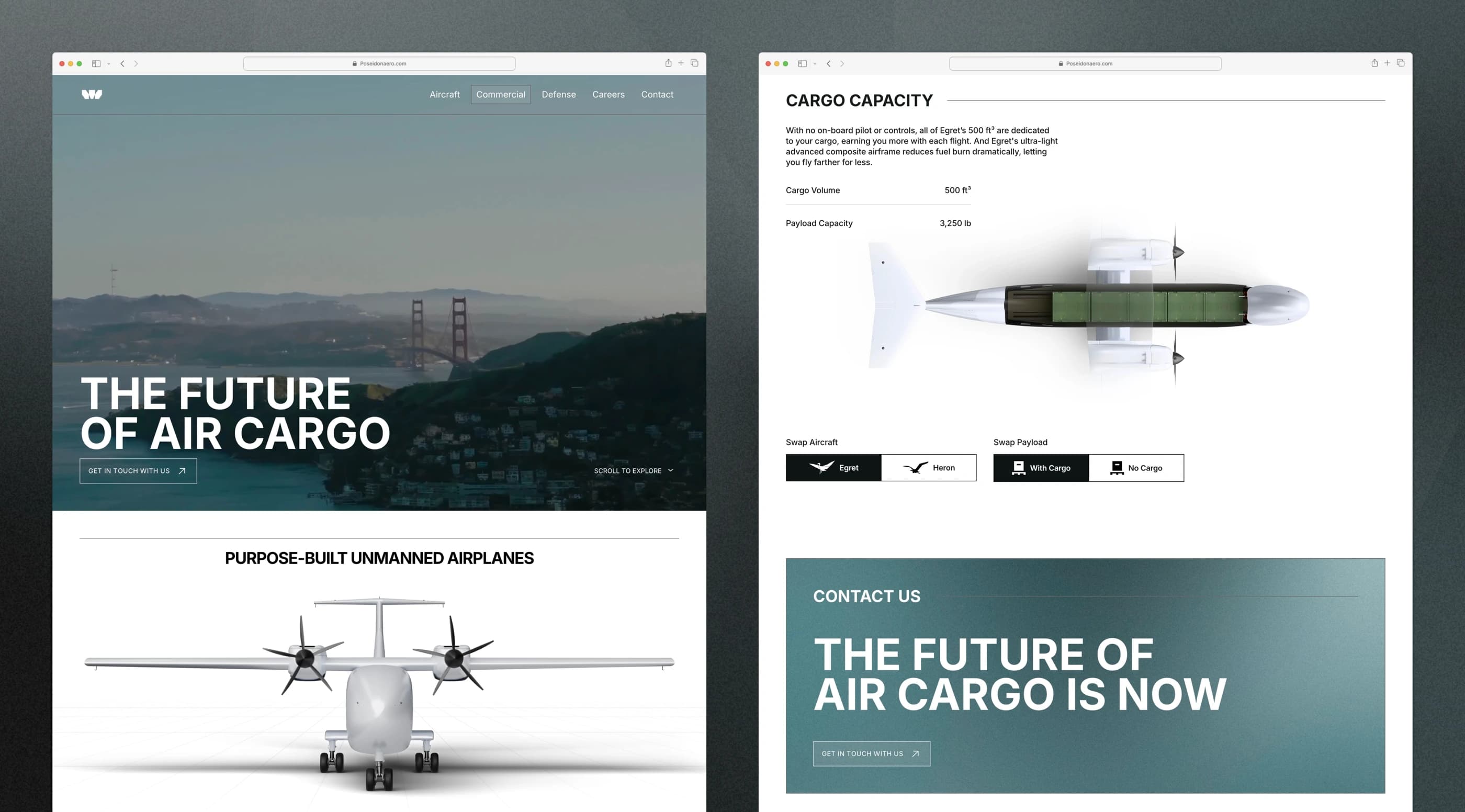
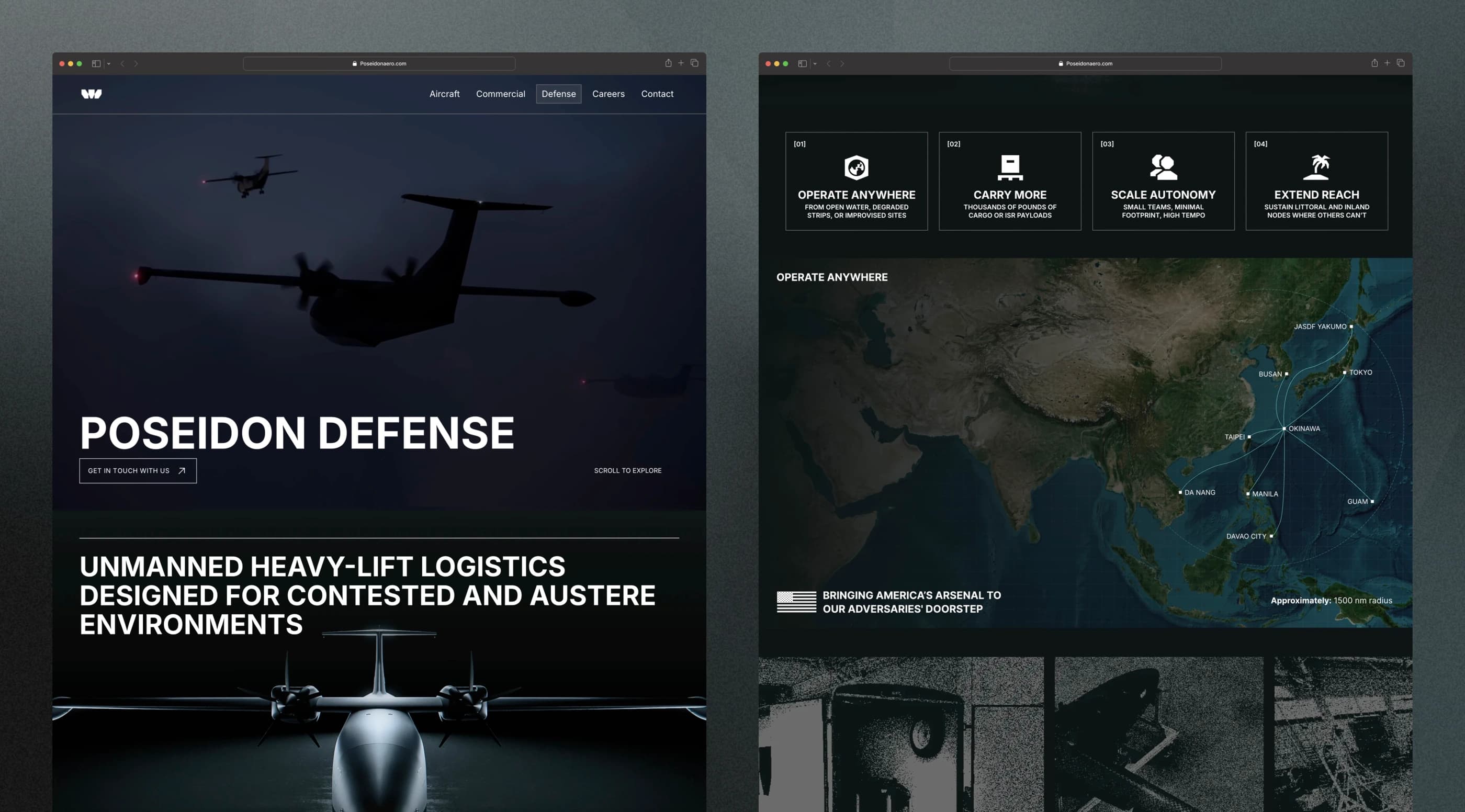
Working with Joel Rowley, I had four weeks to take the site from early concepts to a live product. Before designing, I met with people across the company to understand what each part of the site actually needed to accomplish. Commercial customers needed to understand the economics of autonomous air freight. Defense users cared about operating in remote and contested environments. Recruits needed to see a serious aerospace company worth joining. Investors and press needed to quickly understand the aircraft, the business, and why Poseidon's value proposition mattered. That research became the foundation for the site's information architecture, with dedicated Aircraft, Commercial, Defense, Careers, News, and Contact experiences instead of trying to explain the entire company on one marketing page. The structure is still visible in the live site today.
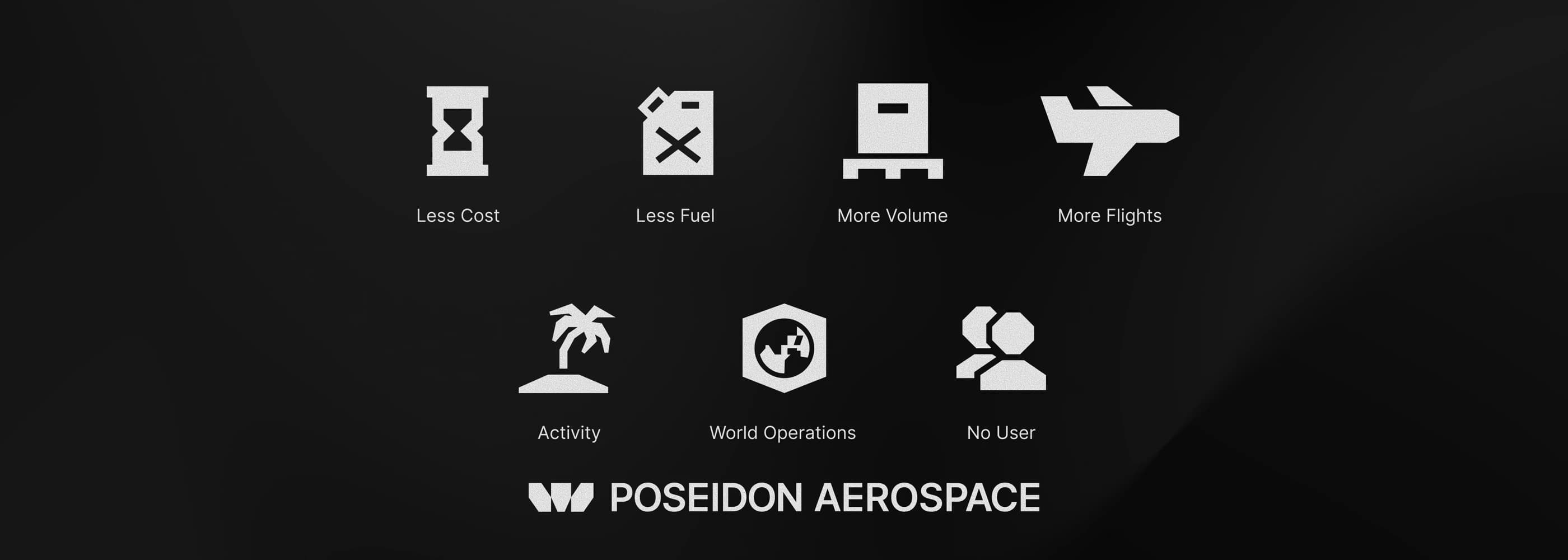
One of the biggest design challenges was that Poseidon was selling the same underlying idea to very different audiences. On the commercial side, the story centered on moving more cargo with lower operating costs, less fuel, and greater aircraft utilization. On the defense side, the same aircraft became a logistics platform for moving cargo without depending on conventional infrastructure.
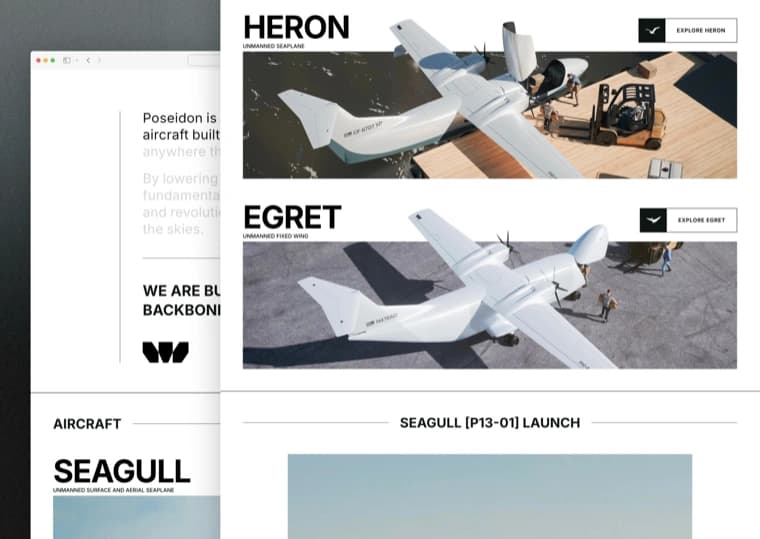
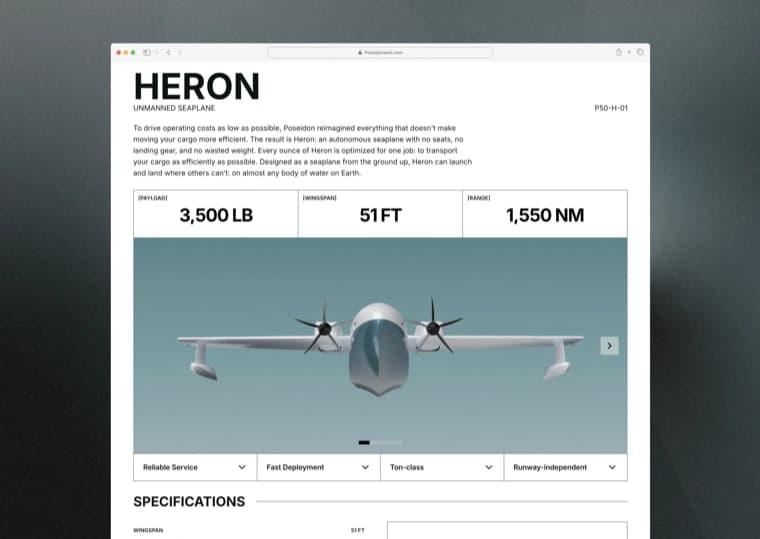
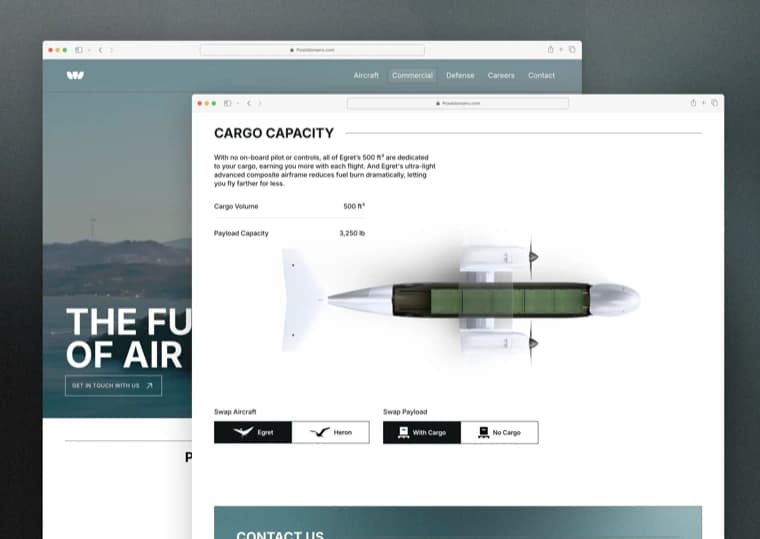
I also wanted the website to show the aircraft rather than bury visitors in aerospace copy. Large renders, motion, specifications, comparison points, and interactive sections became the primary way of communicating what made the aircraft different. I designed the experience in Figma, then built it in Framer, using custom React and JavaScript where the project needed more than the platform could provide. Behind the visible pages, I built the systems needed to keep the site useful after launch: separate inquiry routing for defense and commercial leads, a CMS-powered newsroom, an API-synced job board, and Cloudflare-hosted video so the site could use large aircraft footage without sacrificing performance.
The deadline was fixed around Poseidon's funding announcement, so there was very little separation between design and development. I was moving back and forth between page structure, visual design, responsive behavior, content changes, animation, and production issues throughout the four-week build. The site went live alongside Poseidon's $11 million funding announcement on November 5, 2025.
Analytic Report
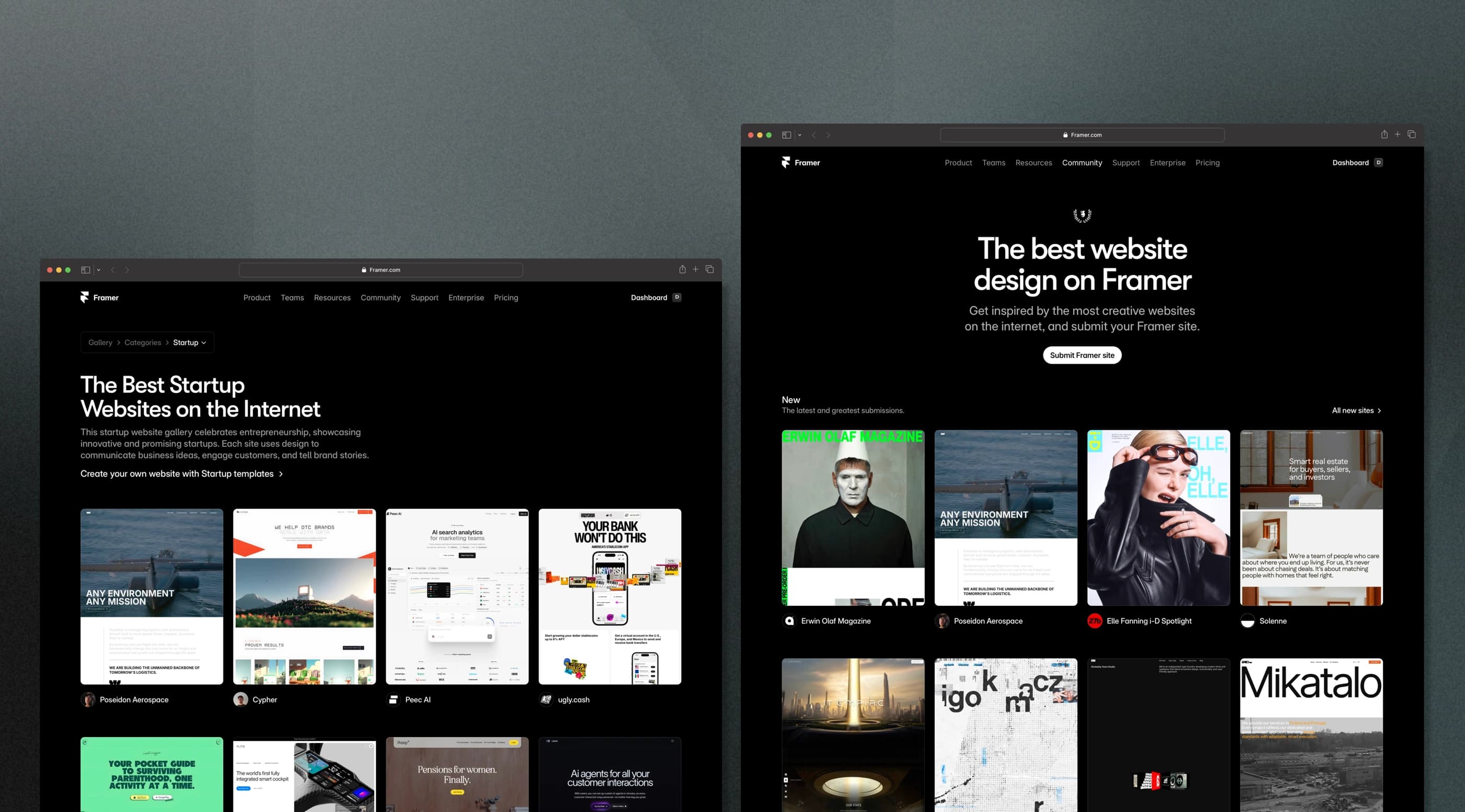
In the first ten days after launch, the site reached 9.3K unique visitors and 21K pageviews. Careers alone received more than 5,000 views, and the new inquiry system routed 22 real customer inquiries to the appropriate teams. The site was later featured by Framer, including in its startup website collection. More importantly, it became something Poseidon could continue building on rather than a one-time launch site. Much of the structure and design remains in production today, and the live website still credits dgur and rowleyvzn for its design and build.
Tools
14 Tools
 Adobe Suite
 Illustrator
 Photoshop
 After Effects
 Premiere
 Figma
 Framer
 Svgator
 Cloudflare
 Resend
 Claude
 Topaz
 React
 JavaScript
Skills
Web design, UX research, information architecture, design system, web development, CMS, animation
Timeline
October - November 2025 · 4 weeks
Role
Contractor - Web Developer/Product Designer
Collaborators
Joel Rowley - Creative Director

Website Design
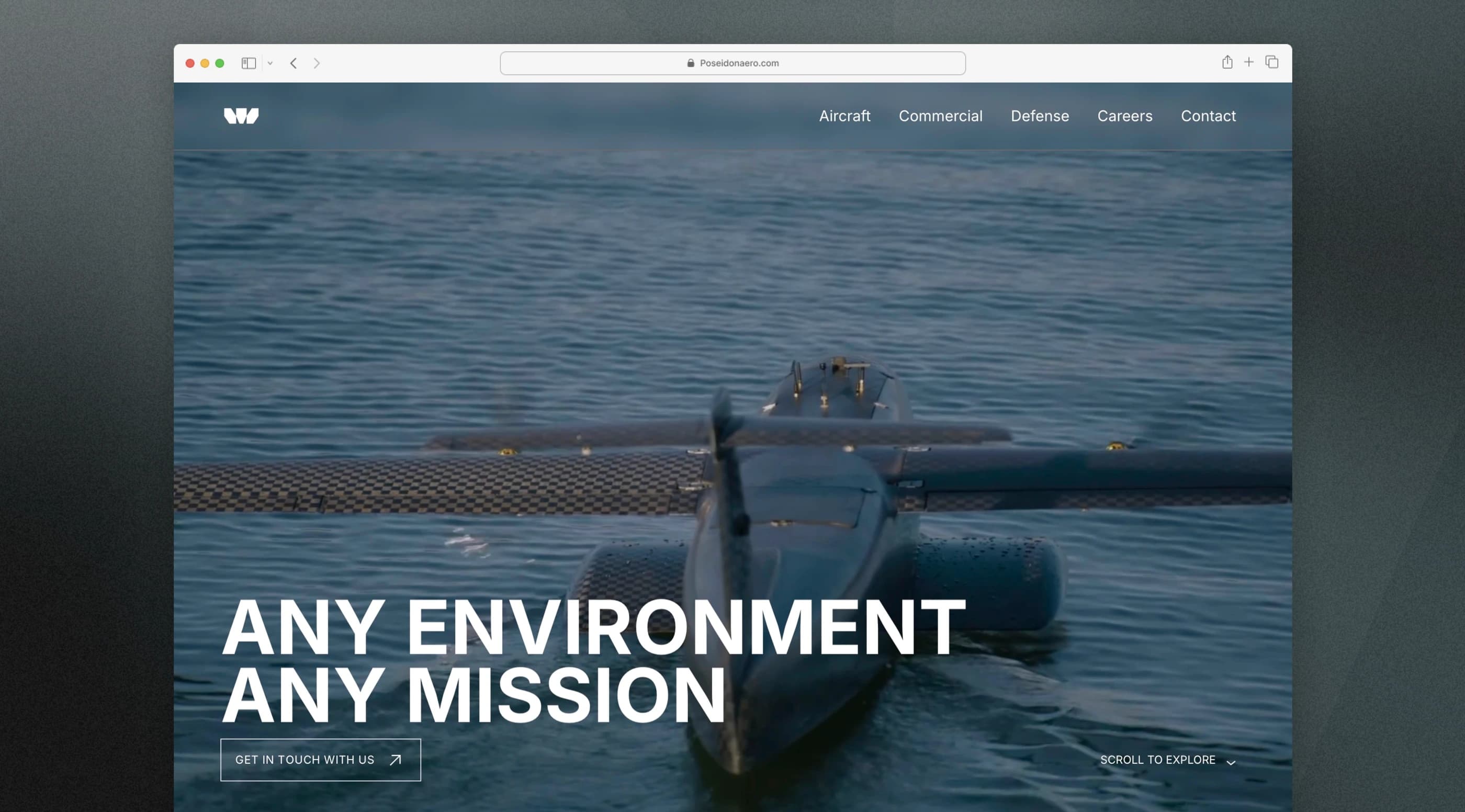
Poseidon Aerospace Icons
Recognition: Framer's Best Websites
Other projects
Explore more work across product design, illustration, and visual systems.
SambaNova Systems
Product designs for full-stack platforms with custom hardware and software for enterprise-grade AI.

Tex Software
Website design and development for a software company building market-intelligence tools for the heavy-equipment industry.
Albacore Incorporated
Website design and development for a YC-backed defense startup building long-range autonomous submarines.
Braze
A 2D platformer about creative block, built in Unity
Plaid Again Design Agency
Design Studio working with clients across the medical technology and financial services industries.
01 / 02
